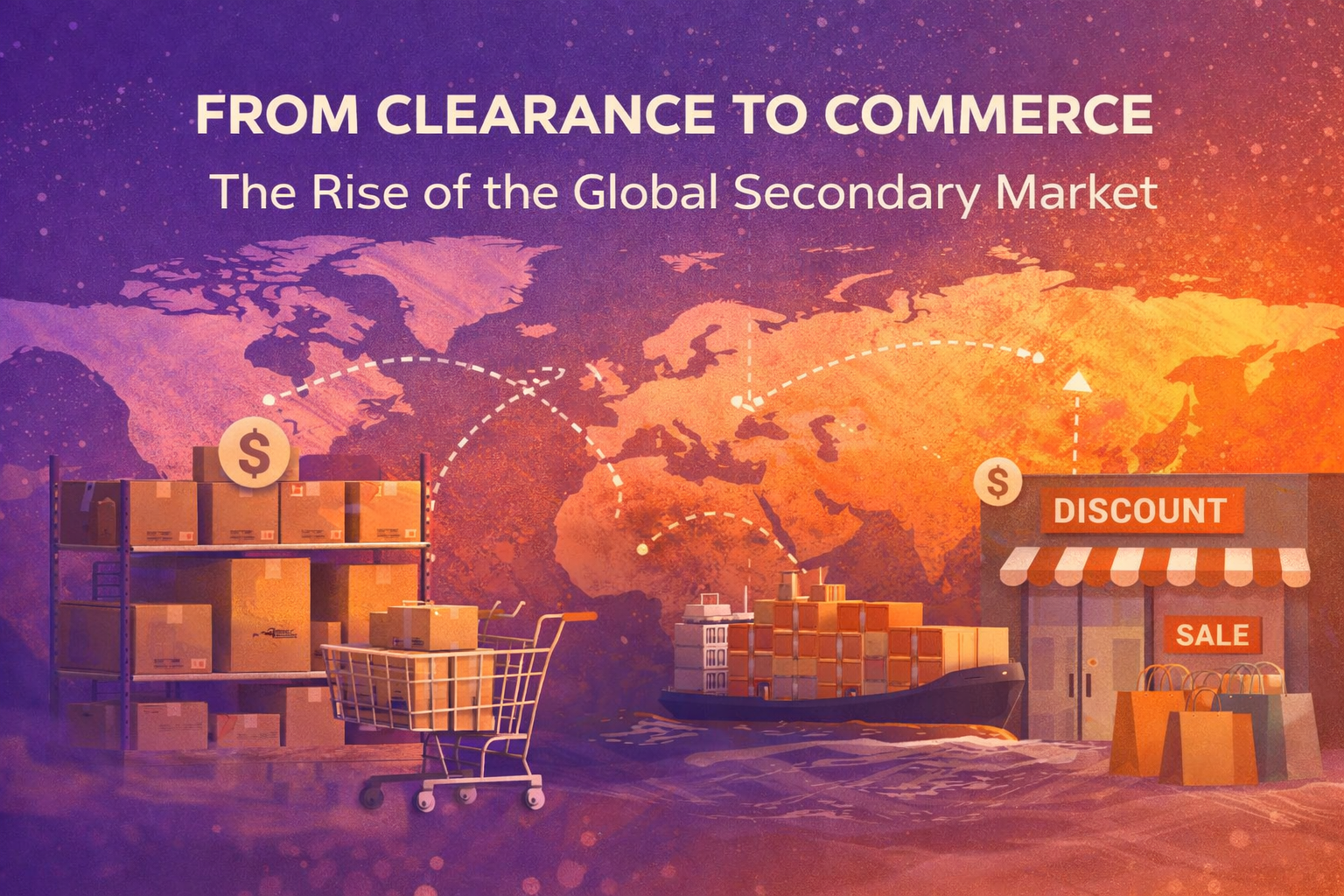
For decades, the secondary market was seen as the final destination for unsold inventory — a quiet corner of retail where excess products were discounted and cleared out.
But today, that perception is rapidly changing.
In 2026, the secondary market has evolved into a global supply channel, connecting brands with buyers across borders and industries. What was once considered a “clearance solution” is now becoming an essential part of modern inventory management.
Why the Secondary Market Is Growing
Several global shifts are accelerating the growth of the secondary inventory economy.
1. Inflation Is Driving Value-Oriented Buying
Across many markets, inflation has changed how businesses and consumers purchase goods.
Retailers, distributors, and traders are increasingly looking for competitive sourcing options to maintain margins. The secondary market offers access to branded inventory at lower price points while still maintaining product quality.
2. The Rise of Discount Retail Models
Entire retail business models now rely on sourcing excess inventory.
Discount chains, outlet retailers, and independent distributors are actively seeking surplus goods from brands and manufacturers. Instead of treating liquidation as an afterthought, these businesses view it as a primary sourcing strategy.
3. Sustainability and the Circular Economy
Excess inventory is no longer simply written off as waste.
Many companies are now prioritizing circular supply chains, where products are redistributed and resold instead of destroyed or discarded. This approach reduces environmental impact while recovering value from inventory that would otherwise remain unsold.
4. Cross-Border Trade Opportunities
Global logistics networks and digital marketplaces have made it easier than ever for buyers to source inventory internationally.
Products that may be oversupplied in one market can often find strong demand in another. This cross-border redistribution is helping create a more efficient flow of goods across regions.
A New Role for Liquidation Platforms
As the secondary market expands, specialized platforms are emerging to help brands and buyers connect more efficiently.
These platforms provide structured marketplaces where:
Brands can move excess inventory responsibly
Buyers can access large volumes of branded products
Transactions can be managed transparently and securely
Instead of relying on fragmented networks of brokers and traders, companies can now access organized digital infrastructure for secondary inventory trading.
The Future of Inventory Movement
The idea that liquidation represents failure is quickly disappearing.
Today, the secondary market plays an important role in:
improving inventory efficiency
supporting global trade networks
extending product life cycles
reducing unnecessary waste
As supply chains continue to evolve, the ability to redistribute excess inventory quickly and responsibly will become a core capability for modern businesses.
Final Thoughts
The secondary market is no longer just a place where inventory goes when it cannot be sold.
It is becoming a dynamic global ecosystem, helping brands unlock value from excess stock while giving buyers new sourcing opportunities.
In many ways, the future of retail inventory may depend not only on how products are sold — but also on how efficiently they are redistributed when demand shifts.
Explore Secondary Inventory Opportunities
Platforms like Pollen are helping streamline how excess inventory moves across markets. By connecting brands with qualified buyers, businesses can redistribute surplus stock more efficiently while buyers gain access to branded inventory at competitive prices.
If you're interested in exploring available inventory or understanding how secondary sourcing works in practice, you can browse the marketplace here:
Explore the marketplace: https://market.pollendirect.com/marketplace